
Freight transport to and from Ukraine
Freight transport to and from Ukraine has changed in recent years – due to changing routes, border conditions and the security situation, this route requires more planning and continuous assessment of the current situation than standard transport within the EU.

Who transports cargo from Ukraine to Lithuania and from Lithuania to Ukraine?
Freight transport from Ukraine to Lithuania and from Lithuania to Ukraine via trans.lt is organised by UAB „Kauno logistikos agentūra“. We assess the nature of the cargo, the route, the document requirements and the border situation so that the client receives a realistic transport solution.
How does freight transport to and from Ukraine work?
We assess the nature, volume and deadline of the cargo, then select a transport solution suited to the specific cargo. The general transport process is described on the International freight transport page – here we focus on what is most important and specific to this route.
Customs formalities
Ukraine is not an EU member state, so the cargo travels with customs declarations and other import or export documents. We coordinate the preparation of documents with the client and customs brokers to reduce the risk of document corrections or delays at the border. The amount of duty depends on the specific commodity code, the origin of the goods and the customs requirements in force at the time, so we assess each case separately together with the customs broker.
How have routes changed in recent years?
Since 2022, congestion at border checkpoints, the security situation and the specific destination have become more significant when planning this route. We therefore assess the route and time buffer individually for each shipment based on the situation at the time.
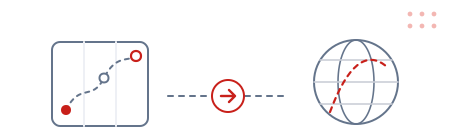
Border crossing and waiting time
Queues sometimes build up at border checkpoints – their length depends on the specific situation and can vary. As the situation changes, we check the current situation at the border after the export declaration has been completed and give the client a realistic estimated transit time based on the information known at the time. This is precisely why we avoid promising a fixed date on this route.
Insurance for transport to and from Ukraine
Insurance coverage may be restricted for certain routes or territories. For transport to or from Ukraine, we separately verify the territorial validity of the carrier’s liability insurance and war risk exclusions before confirming the shipment. Additional cargo insurance for this route is also arranged individually, depending on the specific cargo and the insurer’s terms.
Read more about carrier’s liability insurance and additional cargo insurance on our cargo insurance page.
When to choose a full truckload and when a part load?
A full truckload (FTL) is usually chosen for larger volumes, or when the shortest possible route and fewer intermediate handling stages are important. A part load (LTL) is useful for smaller volumes – the cost is shared between several clients. As the route is currently longer and more complex than a few years ago, we discuss the transit time individually for each request.
What types of cargo are most commonly transported to and from Ukraine?
On the Ukraine route we transport industrial and construction materials, equipment and consumer goods. Freight from Ukraine often includes raw materials and semi-finished products used for further production in Lithuania or other EU countries. The route is relevant both for companies with ongoing business relations with Ukraine and for clients organising a one-off shipment.
Humanitarian and aid shipments also occur on this route – for such cargo we discuss in advance whether any specific documents are required, depending on the nature of the cargo and the destination.
Contact us for a quote
Do you have cargo that needs to be transported to or from Ukraine? Email us at info@kla.lt, call +370 37 454255 or fill in the request form – we will assess the route, cargo details and document requirements and send you a quote with the price and an estimated transit time.
FAQ
Are customs documents required when transporting cargo to or from Ukraine?
Yes. As Ukraine is not an EU member state, customs documents are required – declarations and import or export formalities. We coordinate the required documents and their preparation according to the nature of the cargo, the direction and the information provided by the client, involving customs brokers. When completing EU customs formalities, the relevant economic operator may need an EORI number – this depends on the specific transaction and on who submits the customs declaration.
Do you help plan the entire transport process?
Yes, we coordinate the transport, route, loading time and estimated delivery date and stay in contact throughout the shipment. We coordinate the main stages of the shipment according to the needs of the specific cargo and route.
How long does freight transport from Lithuania to Ukraine take?
The transit time depends on the type of cargo, the route and the current situation at the border, which may change. We state an estimated transit time together with the quote, after assessing the cargo, the route and the current situation at the border.
Do you also transport part loads to or from Ukraine?
Yes. We assess the part-load option and transit time based on the size of the cargo, the route and the shipments planned on this route at the time.
How is cargo transported from Ukraine to Lithuania?
Freight transport from Ukraine to Lithuania works in a similar way to the opposite direction: we select the transport according to the cargo details, coordinate the required documents and monitor the progress of the border crossing based on the information available. When transporting from Ukraine to Lithuania, it is also important to assess customs formalities, the border situation and insurance terms in advance.
Can you collect cargo directly from a supplier in Ukraine?
Yes, we can collect the cargo from a manufacturer, supplier or warehouse in Ukraine. Before loading, we check that the required export documents have been prepared so that loading and the border crossing can be planned smoothly.
Is cargo transported to or from Ukraine insured?
Not automatically. Carrier’s liability (CMR) insurance is not cargo insurance – it covers the carrier’s liability under the CMR Convention, subject to the terms and limits of the specific policy. It may not cover the full value of the cargo. On the Ukraine route it may be subject to additional exclusions or territorial restrictions. If protection of the cargo value beyond the limits of the carrier’s liability is required, additional cargo insurance is arranged separately. Its availability, coverage limits, exclusions and price are assessed by the insurer based on the specific cargo, route and destination in Ukraine.
How much does freight transport to or from Ukraine cost?
The price depends on the size of the cargo, the route and the chosen solution – full truckload or part load. We provide an exact price after assessing the specific request.
Can I submit a request online?
Yes. You will find the request form on our website. During working hours we usually reply to requests within 1–2 working hours – with a quote or with clarifying questions.
Is special packaging or marking required when transporting cargo to or from Ukraine?
It depends on the nature of the cargo and the packaging used. If pallets, crates or other packaging material made of raw wood are used, ISPM 15 requirements may apply – the wood must be properly treated and marked in accordance with this standard. Ukraine applies ISPM 15 to imported and exported wood packaging material. The shipper or the party ordering the transport is responsible for the packaging and marking of the cargo and for the accuracy of the data provided in the documents, unless the parties agree otherwise in writing.
Which transport company should you choose for cargo to Ukraine?
On the Ukraine route it is worth choosing a company that can give specific answers to four questions: how to plan the border crossing and time buffer under current conditions, which customs documents are required for your cargo, whether the wooden packaging complies with ISPM 15 requirements, and which territorial insurance restrictions apply to this route. If these matters are discussed before the order is placed, the shipment is easier to plan without surprises.